Advertisement advertisements
Start an honest conversation about Renewable energies in the world: advances and challenges for 2030 This means assuming that they are no longer a futuristic idea, but a global priority.
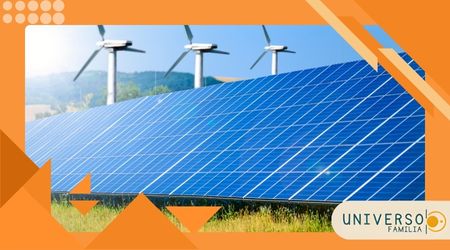
Before going deeper, it's worth reviewing a brief summary.
What this transition entails, its most outstanding advances, the obstacles that persist, a relevant statistic, two current examples, a clear analogy and a table that summarizes the outlook towards 2030.
Ultimately, how can you make a sound decision without understanding the starting point?
The energy transition that redefines priorities
When discussing the global renewable energy boom, one obvious reality emerges: governments, companies, and individuals are accelerating the shift towards cleaner technologies.
Advertisement advertisements
The logic behind this movement is not only environmental; it also responds to economic, social, and geopolitical reasons.
Each country is progressing at its own pace, although the general trend points towards more flexible, less polluting electrical systems capable of supporting increasing demands.
The International Energy Agency's (IEA) latest report confirmed that global solar and wind power capacity surpassed the 90% barrier of net installed electricity capacity growth in 2023, a turning point that sets the course until 2030.
This data reveals a transition that is already underway and that influences investments, employment, and productive structures.
The renewable energy sector as a global economic driver
The expansion of clean energy depends not only on environmental convictions. It also responds to increasingly competitive costs.
Solar photovoltaic energy, for example, has become the cheapest option for electricity generation in more than 60 countries, including several Latin American nations.
This economic shift opened doors to new business models, attracted investors, and generated value chains that did not exist just over a decade ago.
Meanwhile, wind power consolidated itself as a mainstay in regions with high availability of natural resources, from northern Mexico to the Atlantic coast of Brazil and southern Spain.
This scenario demonstrates that green growth is not exclusive to developed economies; it has also become an opportunity for emerging markets seeking greater energy independence.
A look at the technologies leading the transformation
Residential and commercial solar systems have multiplied in cities with rising electricity rates.
Meanwhile, lithium batteries, key for energy storage, have seen price drops of more than 80% over the past ten years, allowing homes and businesses to adopt more reliable hybrid solutions.
Offshore wind power is also advancing strongly, especially in Europe and Asia.
Although its implementation requires larger investments, it offers constant and high-capacity production, making it easier to replace fossil fuel power plants without depending on unpredictable weather conditions.
Analogy to visualize change
Imagine it as the evolution of a transportation system: for decades, the world operated with only one type of fuel.
Today, however, we are moving towards a diversified network where each technology brings different advantages.
Some routes are faster, others more stable, and various combinations allow you to go further with fewer resources.
The energy transition works in a similar way: multiple sources working together to build a more robust system.
Real challenges that are hindering progress towards 2030
Although progress is undeniable, barriers that limit renewable growth also persist.
The main problem lies in the electrical infrastructure. Many countries rely on outdated grids that are incapable of massively integrating intermittent sources such as wind or solar power.
Modernizing these systems requires investment, vision, and institutional coordination.
Another limitation relates to access to critical minerals.
Demand for lithium, nickel, and copper will increase considerably to meet the expansion of batteries and green technologies.
Managing this extraction in a socially and environmentally responsible manner became a global challenge.
Added to this is the need to professionalize the workforce.
Engineers, technicians, and specialized operators are not always trained at the pace demanded by the market, so several countries are working to strengthen educational programs linked to the energy sector.
Comparative table: key progress towards 2030
| Region / Indicator | Main advances | Predominant challenges |
|---|---|---|
| Latin America | Competitive solar and wind potential; growing hybrid projects | Overloaded electrical grids; inconsistent regulatory frameworks |
| Europe | Leader in offshore wind and storage | High transition costs; dependence on imported minerals |
| Asia | Accelerated expansion of solar panels and batteries | Urban pollution and high energy demand |
| North America | Tax incentives and technological development | Political disputes and infrastructure delays |
Read more: World Economy in 2025: Recession or Recovery?
How countries are accelerating the transformation
To address the aforementioned challenges, various governments designed strategies that seek to balance growth and sustainability.
Some nations adopted carbon neutrality goals, which spurred large-scale renewable energy generation projects.
Others strengthened tax incentives, making it easier for households to install solar panels or for companies to migrate to circular models.
In Mexico, for example, the conversation about energy transition was strengthened by investments in solar and wind farms in the north of the country.
Although the regulatory framework is still under discussion, renewable installed capacity continues to advance, especially in private projects seeking to reduce operating costs.
Example 1: Community integration in rural areas
In several Latin American regions, isolated communities are adopting solar microgrids to ensure constant access to electricity.
This model reduces dependence on diesel generators and allows schools, clinics, and small businesses to operate with greater stability.
In addition, microgrids promote energy independence, a vital benefit in areas with low public infrastructure.
Example 2: Wind farms as an industrial engine
In northern Europe, the expansion of offshore wind power boosted industrial clusters specializing in turbines, submarine cables, and logistics services.
Small and medium-sized enterprises found opportunities in this production chain, demonstrating that the energy transition can strengthen entire regions and create sustainable long-term jobs.
Global opportunities towards 2030
Innovation will be crucial to achieving climate goals and expanding the share of clean energy. Sustained growth is expected in:
Smart grids capable of balancing supply and demand.
Green hydrogen technologies for industrial processes.
Carbon capture and storage in sectors that are difficult to decarbonize.
Hybrid systems that integrate batteries, panels, and turbines in the same space.
The advancement of these solutions will allow the energy transition to depend not on a single source, but on a complete ecosystem capable of responding to the demands of the future.
Conclusion: a clear vision for a possible future
Think about Renewable energies in the world: advances and challenges for 2030 It is about reflecting on decisions that are already shaping the global economy and well-being.
Opportunities are growing, although they require planning, investment, and collaboration.
The transition will not be homogeneous or immediate, but it is advancing at a speed that marks a before and after in energy history.
The challenge is not only to generate clean electricity, but to build systems capable of sustaining it for decades.
Read more: Scientific discoveries that will change the future
Frequently Asked Questions
Can renewable energies meet all global demand?
Not yet, although the IEA projects that more than 50% of new global electricity generation in 2030 will come from renewable sources.
The technological combination will be key.
Is energy storage reliable enough?
Yes, although it continues to improve. Current batteries offer longer lifespans and lower costs, and new hydrogen systems could complement this capability.
Does the energy transition increase electricity prices?
It depends on the country. In many cases, renewables reduce costs in the medium term because they maintain more stable tariffs compared to fossil fuels.
Can developing countries adopt clean energy quickly?
They can do it, especially in regions with high solar radiation or constant winds. However, they need to modernize networks and implement clear regulatory frameworks.