Advertisement advertisements
In the digital age, where technology redefines the way we live, Practical guide to a smart and connected home It has become an essential topic for those seeking comfort, efficiency, and sustainability.
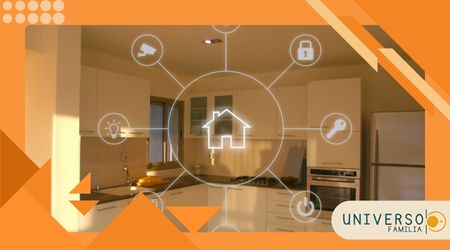
This type of housing is not a luxury reserved for a few; it is an accessible and strategic evolution that improves the quality of daily life, optimizes resources and offers advanced security.
Summary
In this article you will discover how smart home systems work, what benefits they offer, which devices are most recommended in 2025, how to integrate technology safely, and what trends will shape the future of connected homes.
In addition, relevant statistics, a comparative table, practical examples, and a frequently asked questions section are included at the end.
The evolution towards a smart home
A decade ago, turning on lights with your voice or adjusting the temperature from your cell phone seemed like science fiction.
Advertisement advertisements
Today, it is an everyday reality.
A smart home It uses interconnected devices, from sensors to virtual assistants, that communicate with each other via the internet, automating tasks and creating personalized experiences.
According to Statista (2025)More than 471% of households in Latin America already have at least one smart device, a figure that grows every year driven by accessibility and interest in energy saving.
Mexico, in particular, leads the adoption in the region thanks to the increase in 5G networks and the integration of systems compatible with multiple brands.
This technological revolution not only transforms housing, but also people's relationship with their environment:
The home ceases to be a passive space and becomes a interactive ecosystem that adapts to each person's pace.
Why transform your house into a smart home?
The appeal of Practical guide to a smart and connected home It lies in its balance between functionality, comfort and sustainability.
Home automation offers concrete advantages:
- Energy efficiency: Intelligent systems adjust the consumption of light, water and air conditioning according to actual use, reducing expenses by up to 25%, according to data from the Inter-American Development Bank (IDB).
- Advanced security: AI-powered cameras, motion sensors, and digital locks provide remote control and real-time alerts.
- Personalized comfort: The devices "learn" from the user's habits, creating ideal environments according to the time, weather or mood.
- Centralized control: Everything can be controlled from an app or via voice commands, even when away from home.
The key is to understand that technology is not meant to complicate life, but make it simpler, more intuitive and sustainable.
How to start transforming your home
Adopting a smart home doesn't require a large initial investment.
The ideal strategy is to move forward step by step, prioritizing the areas that have the greatest impact on your daily well-being.
1. Start with the lighting
Smart spotlights are the most popular starting point.
They allow you to control the intensity, schedules, and colors from your phone.
A concrete example: you can program the lights to turn on gently at dawn, improving your rest and reducing unnecessary energy use.
2. Control the climate precisely
Smart thermostats, such as Nest or Ecobee, analyze your behavior and adjust the temperature automatically.
If they detect that no one is home, they reduce energy consumption.
In addition, some models integrate climate information to anticipate changes and maintain a stable environment.
3. Increase security
Digital locks with facial or fingerprint recognition offer a higher level of protection than traditional keys.
AI-powered cameras, meanwhile, differentiate between people, pets, or suspicious movements, avoiding false alarms.
4. Connect your appliances
Most brands already include smart features:
Refrigerators that suggest recipes based on the inventory, washing machines that adjust cycles according to the load, or robotic vacuum cleaners that recognize spaces.
5. Centralize control
The true power of a smart home lies in the integration.
Platforms like Google Home, Alexa, or Apple HomeKit allow you to unify all devices into a single ecosystem, providing total control from an app or with voice commands.
Comparative table: main control systems
| Platform | Compatibility | User interface | Voice assistant | Security level |
|---|---|---|---|---|
| Google Home | Multibrand (Nest, Philips, LG, etc.) | Very intuitive | Google Assistant | High |
| Amazon Alexa | Wide range of devices | Accessible and stable | Alexa | High |
| Apple HomeKit | Apple Ecosystem | Minimalist | Siri | Very high |
Read more: Artificial Intelligence in everyday life
Example 1: an automated routine in real life
Imagine that, upon waking, the curtains slowly open, the coffee maker turns on by itself, and your morning playlist starts playing.
Meanwhile, the thermostat adjusts to the ideal temperature and the bathroom mirror shows you the day's weather.
It's not about luxury, but about efficiency applied to well-being.
That everyday experience, managed by sensors and programmed routines, represents the essence of Practical guide to a smart and connected home:
Simplify life while caring for the environment.
The connection between technology and sustainability
Smart homes are also allies of the planet.
Thanks to automation, energy and water consumption is significantly reduced.
In Mexico, the National Commission for the Efficient Use of Energy (CONUEE) It promotes the use of smart home technologies as part of national energy saving policies.
The concept of technological sustainability is no longer optional, but a shared responsibility. A home that "thinks" not only takes care of its finances, but also protects natural resources.
Example 2: a house for elderly people
An inspiring example is that of a retired couple who integrate motion sensors, smoke detectors, and automated medical reminders.
The AI alerts them when they forget to take medication or if there is an anomaly in electricity consumption.
This type of solution demonstrates how technology can have a human purpose: to accompany, care for, and offer independence.
The analogy of the home as a living organism
Think of your home as an organism that breathes, feels, and reacts.
Each connected device functions as an “organ” that detects, analyzes, and responds to stimuli.
AI would be the central nervous system that coordinates everything in harmony.
In this way, the smart home not only automates tasks:
Create a synergy between technology and emotionwhere every action has a purpose and every interaction contributes to well-being.
Connected home trends in 2025
Progress continues. These are the main trends defining the current landscape:
- Contextual AI: The systems learn not only habits, but also emotions and moods to adapt the lighting, music, or climate.
- Domestic renewable energy: Integration of solar panels with intelligent systems that manage their use and storage.
- Full interoperability: The Matter trend will allow devices from different brands to communicate without limitations.
- Visionary Assistants: Cameras that interpret gestures and movements to execute voiceless commands.
These innovations are driving the transition to truly connected, conscious, and personalized homes.
Challenges and precautions
Although the benefits are extensive, the risks should not be ignored.
Privacy and cybersecurity are critical aspects in the Practical guide to a smart and connected home.
Experts recommend:
- Use strong passwords and update them regularly.
- Keep device firmware up to date.
- Review access permissions in each linked app.
The goal is to enjoy convenience without compromising digital security.
Conclusion
Transforming your house into a connected home is a decision that goes beyond technology. It means adopting a more efficient, secure, and sustainable lifestyle.
The Practical guide to a smart and connected home It offers you the tools to create a space where technology works in your favor and not the other way around.
Ultimately, it's not about having more devices, but about live better, with a balance between innovation and humanity.
Are you ready to let your home learn to take care of you too?
Read more: 5 AI apps to organize your home routine
Frequently Asked Questions
1. How much does it cost to transform a house into a smart home?
It depends on the level of automation.
On average, a basic initial investment ranges from $300 to $600, enough to integrate lighting, security, and climate control.
2. Is a constant internet connection required?
Yes, most devices require a stable Wi-Fi connection to function properly and receive updates.
3. Is it possible to use different brands in the same system?
Thanks to the Matter standard, launched in 2023, most devices from different brands can now work together.
4. Do smart systems consume a lot of energy?
No. Its purpose is precisely to reduce consumption, automatically adjusting demand according to actual usage.
5. What trend will dominate the future of smart homes?
Emotional personalization: homes that recognize moods and adapt their environment to improve well-being and mental health.